Sector Seven Contemporary Art Gallery (S7CAG) is proud to present Translating the Void: Garry Nalbandyan on Isolation, Intuition, and the Canvas. This feature marks a definitive milestone in our curatorial history as the first-ever presentation of an international artist by S7CAG, expanding our program beyond its localized national network within California, USA.
Through this editorial, we explore Nalbandyan's profound transition from an international laureate, soloist, and orchestral violinist to a globally recognized contemporary painter. This text provides a rare window into his lifelong compulsion to explore the visual arts, detailing how he pivoted his career to the canvas despite intense personal, professional, and psychological struggles. Readers will discover the radical intuition, alla prima methodology, and deep philosophical structures that define his evocative, heavy impasto landscapes.
For archival purposes, please note that the biographical narrative below was developed through an interview conducted via email correspondence on May 18, 2026. Esteban Lopez was located in South Pasadena, California, USA, while Garry Nalbandyan participated from his private residence and studio in Tbilisi, Georgia.

The Psychological Landscape
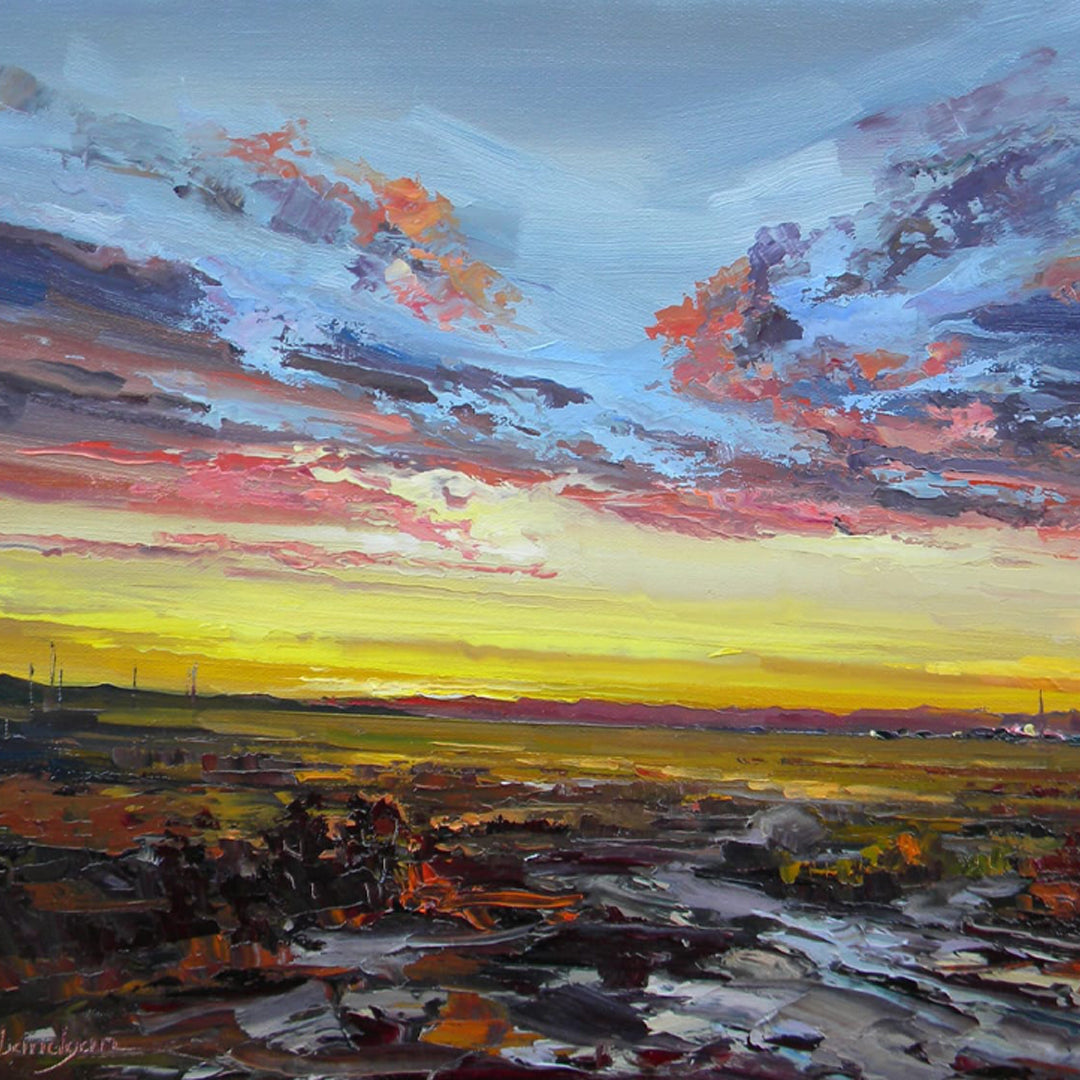
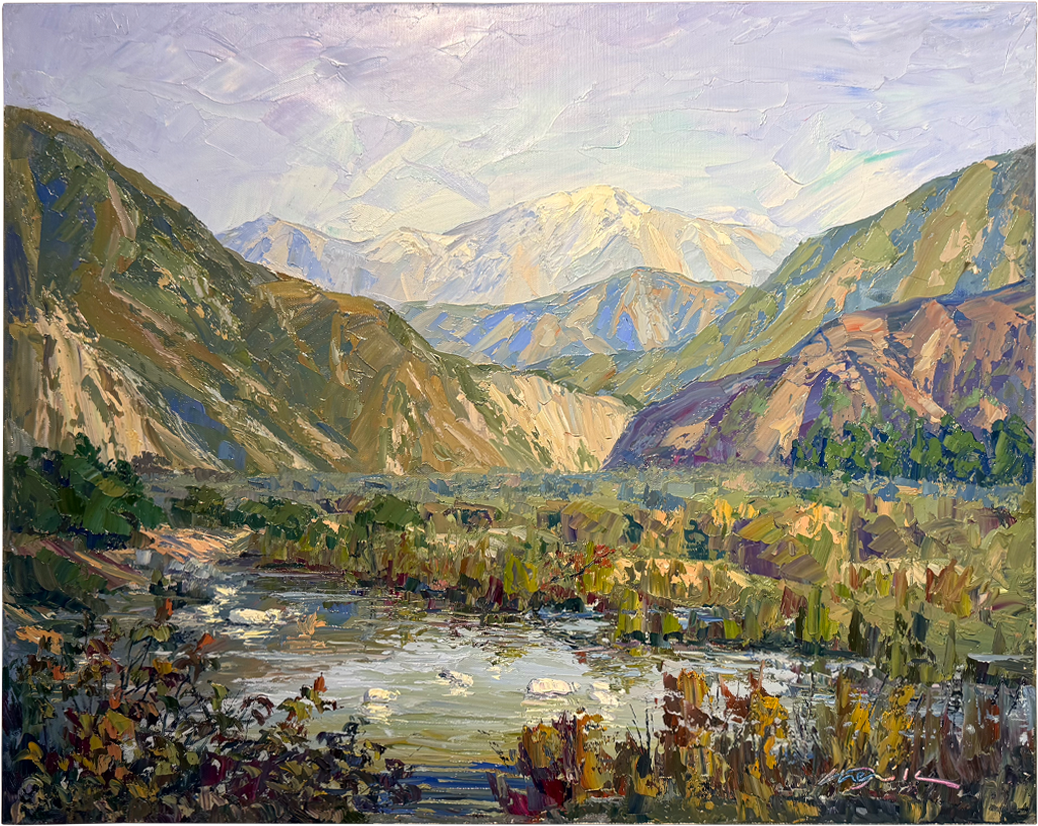
Born in 1980 in Tbilisi, Georgia, Garry Nalbandyan is a contemporary oil painter whose visceral landscapes serve as a conduit for exploring the psychological complexities of the modern era. Utilizing heavy impasto and a palette knife, Nalbandyan’s work navigates the space between classical observation and profound emotional expression. For Nalbandyan, an artist’s primary duty is to reflect their zeitgeist. As he explains:
"In my art, I try to convey melancholy, emptiness, and the loneliness of the modern world. In every historical era, artists painted the spirit of the time they lived in. During Rembrandt’s era, many artists worked with religious themes and symbolism. Later came Impressionism — France, Europe, men in stockings, women in beautiful dresses. During communism, artists were expected to place the image of Lenin or Stalin somewhere in their work. Today, however, we live in an era of epidemics, wars, emptiness, lack of communication, and isolation."
From Symphony to Canvas
Nalbandyan’s path to the canvas was unconventional, forged through intense personal and professional struggle. Raised in a family where his mother was a conservatory-trained pianist and his father an engineer, his prodigious musical ear was identified early. This led to a grueling, mandated education in the violin, eventually culminating in a doctoral degree in violin performance from the Yerevan State Conservatory. He built a highly successful career as an international laureate, soloist, and orchestral musician. Yet, his innate visual creativity never wavered. "But throughout all those years, whenever there was any opportunity, I continued drawing and painting," he reflects.
The relentless demands of the stage and the pressures of orchestral work took a severe toll on his health, ultimately manifesting as severe depression and agoraphobia. Following a taxing concert tour in Western Germany in 2012, Nalbandyan found himself unable to sustain his musical career or comfortably leave his home. It was within this period of isolation that he pivoted entirely to the visual arts, deciding to transfer his internal pain and experiences directly onto the canvas.

The Alchemy of Observation
Seeking profound expressive freedom, Nalbandyan embarked on an intense period of self-directed study, analyzing the works of masters like Rembrandt and Arkhip Kuindzhi, alongside contemporary painters, philosophy, and optical physics. This rigorous dedication quickly yielded a resonant body of work. "By reading extensively, studying the works of great masters, and constantly working, my paintings gradually began to sell. Some time later, I started earning well from them."
Nature as a Psychological Mirror
Nalbandyan’s creative process is deeply intuitive, prioritizing raw emotion over rigid academic technique. He approaches the canvas with a sense of spiritual surrender, noting, "Very often while painting, I feel as though someone else is guiding my hand. I cannot explain how it happens. I enter a strange, undefined state. I do not consciously choose colors — it happens beyond rational thought."
To preserve this immediacy, Nalbandyan insists on an alla prima approach, completing his works in a single sitting. He visits specific locations to absorb the atmosphere and breathe the air before returning to his studio to translate those raw sensations onto the canvas. He avoids overworking his pieces, believing that if a painting is endlessly reworked, the original emotion is lost: "At that point, the work becomes intellectual rather than intuitive."
Nature, for Nalbandyan, is not merely a subject, but a psychological mirror. "Most of the time I paint landscapes — not because I simply love nature, but because through nature I can express many things." Rather than illustrating his biography literally, he infuses his environments with his internal state. "I rarely depict my personal life directly in my paintings. Instead, I try to transfer all emotions, including my personal experiences, into fields, sunsets, dawns, and landscapes."

A Global Resonance
Today, despite lacking formal academic training in the visual arts, Garry Nalbandyan has established a powerful voice in contemporary landscape painting. His emotionally charged, atmospheric works have resonated with a global audience, expanding far beyond his studio: "My paintings began entering private collections in France, Germany, Spain, Russia, America, and Iceland.